
Contemporary cinema and the challenges of multimedia
Is cinema dead? Long live the cinema!
Luciano Mariani
info@cinemafocus.eu
© 2026 by Luciano
Mariani, licensed under CC
BY-NC-SA 4.0
"Cinema is an invention with no future ... It may be exploited for a while as a scientific curiosity: beyond that, it has no commercial future."
Antoine Lumière, father of the two brothers who
invented the ‘cinematograph’ (Note 1)
1. Introduction
The question and exclamation in the title of this paper seem to suggest an ambiguity, or even a contradiction: can one wish a long life upon someone or something whose death is feared or foretold? We intend to explore various avenues to demonstrate that the question and the exclamation are not necessarily at odds with one another, but can in fact be linked to discuss the state of cinema at the dawn of the third millennium.
The starting point must be to ask who might have said ‘Is cinema dead? Long live the cinema!’, because both the question and the wish presuppose someone with specific ideas and convictions on the subject. Generally speaking, we can say that, on the one hand, this may refer to public opinion, cinema ‘users’, and ‘audiences’ comprising both occasional cinema-goers and the most die-hard film buffs; on the other hand, it may refer to all those who, in various capacities, can be identified as ‘professionals’ linked to cinema – from directors to all their collaborators, from film critics to academic scholars. From an alternative yet complementary perspective, we could also say that amongst those interested in various ways in the issues raised by the title of this paper are, on the one hand, the end ‘users’ of cinema (i.e. those who ‘consume’ cinema), and on the other hand the ‘producers’, a term which encompasses not only actual producers in the strict sense, but also filmmakers, distributors, marketing managers, and so on (in other words, those who produce and sell films). All these categories of people, involved in various ways in the world of cinema, may ask themselves the same question and express the same hope, but from completely different perspectives and with entirely different motivations, and with an equally varied range of knowledge and skills.
Let’s look at a few examples of these different and alternative perspectives, which we will explore in more detail in the following sections. The cinema-going public is no longer made up solely of those who ‘go to the cinema’, but of everyone who watches a film on television, on a streaming platform, via a DVD, on the internet, and in the myriad other ways in which it is now possible to enjoy the ‘film’ as a product. Whilst, on the one hand, cinema is no longer identified solely with the ‘cinema auditorium’, on the other hand, there seem to be no limits to the expansion of cinema into a myriad of other forms – hence the more than legitimate question of whether cinema, as it was experienced throughout the 20th century, is in fact now ‘dead’, or at least whether its expansion into the multimedia universe has effectively ‘dissolved’ it amongst the myriad products with which it shares the space of this universe. Even the contrast between analogue and digital, which we shall encounter repeatedly in our exploration, takes a back seat for audiences – consumer products are now largely digital, and the cinema-going experience has remained essentially the same, despite the fact that the entire production chain, right down to the cinema projector, has been almost completely transformed by the adoption of digital technology.
But from another perspective – or rather, from the other perspectives we mentioned above – the same issue arises with very different emphases and viewpoints. For example, the now somewhat outdated debate between advocates of analogue and digital has taken on – and in some respects still takes on – paramount importance, since, as we have said, all stages of film production are involved – to such an extent that one wonders whether the ‘film’ as a final product is still effectively a ‘film’ as we have always understood it, or whether digital technology has altered its very nature. (Incidentally, it is interesting to note that the term ‘digital film’ is a contradiction in terms: if by ‘film’ we mean classic celluloid film, that is, the medium on which the product was recorded, it is clear that with digital technology—that is, with electronic and computer-based media — the ‘film’ has physically become something very different.) From these same perspectives, the questions become even more radical: can we still call ‘cinema’ something which, as already mentioned, transcends the cinema auditorium to invade our lives in the form of images displayed on televisions, computers, tablets, smartphones, and screens as varied as those found on a plane or a train, in a waiting room, on the walls of a building, and so on? It is clear that what is at stake here is the meaning of the term ‘cinema’ as it was understood until not so long ago, with the implication that this ‘cinema’ is now dead and has been replaced by many other ‘cinematic experiences’ that often have little to do with the classic ‘going to the cinema’. But from this very perspective, as we shall see, different yet fascinating possibilities open up, provided one is willing to accept what is, in any case, now inevitable: namely, that multimedia experiences have, in a sense, also absorbed traditional viewing habits – thus justifying the exclamation “Long live the cinema!”, aware that this wish refers to a range of products and experiences, and no longer just to the cinema auditorium.
2. From the audience’s perspective: the ‘cinematic experience’
2.1. The ‘classical’ experience and (post)modern experiences
| "Firstly, we have experience of a place, the theater. It is a delimited place, but not closed. The theater is not a retreat, like the home, nor is it an open world, like the metropolis. It instead forms something of a middle ground, where citizens converge and share the same emotional experiences ... Secondly, we have the experience of a situation that is both real and unreal. The spectator goes on living in an everyday universe, and at the same time also lives in an extraordinary universe. The first universe revolves around her/his encounter with other spectators, the second around her/his encounter with the film ... Thirdly, we have the experience of a diegetic world which is made up of images (and sounds), but which can also have a consistence and depth of its own. Indeed, the spectator, viewing a film, sees pictures, but at the same time sees “beyond” the pictures, to the reality that is represented. This means that the spectator interprets filmic reality as something in which she/he might be immersed, thanks to a tight game of projection and identification with what appears onscreen ... There is, then, the experience of a place, the experience of a situation and the experience of a world ... the first two aspects converge towards the third: going to the cinema and joining other spectators activates a gaze (and also a capacity to listen) which allows the events recounted to be at once grasped and lived as an experience." (Note 2) |
We have already mentioned that some of the terms used in this discussion are rather ambiguous and certainly warrant clarification. Until a few decades ago, for example, ‘cinema’ had a very specific meaning for most people: ‘going to the cinema’, that is, leaving home to be there at a certain time, paying for a ticket for a film that had already been chosen (or perhaps decided at the last minute based on the theatre’s programme), choosing a seat according to one’s preferences, waiting for the film to start, watching various adverts and/or trailers for upcoming releases, and finally settling in to watch the film in a virtually dark, and usually silent, cinema (with the usual exceptions…), with the opportunity, of course, to exchange a few words with the person sitting next to you. The screening was often interrupted halfway through the film, with a short interval between the ‘first’ and ‘second’ halves. At the end, everyone would head towards the exit together, perhaps exchanging a few thoughts or opinions on the film they had just seen.
To younger generations, this description might seem implausible, given how much the ‘viewing habits’ mentioned above have changed. Yet, for much of cinema’s history, ‘going to the cinema’ was virtually synonymous with ‘watching a film’. This way of experiencing ‘cinema’ constituted a well-established cinematic experience, with its own rules and ‘rituals’, which corresponded to a social and cultural practice deeply rooted in popular culture. Within a few decades, however, the public gradually and almost without realising it became accustomed to enjoying other ‘viewing experiences’, as the film market, driven by new technologies, made available many alternatives to the classic ‘going to the cinema’. All in all, we have become accustomed quite quickly to broadening the range of these experiences with cable and then satellite television, with DVDs/Blu-rays, with social media channels on the Internet, and finally with streaming services that send the film one has chosen to watch directly to one’s television (but also to one’s tablet, smartphone, etc.). The transition from the ‘traditional’ experience – which was virtually uniform (with the usual exceptions) across the globe – to these ‘new’ cinematic experiences has brought about quite radical changes in viewers’ habits, behaviours and choices, to the extent that a film’s ‘audience’ has become far more diverse - giving rise to a wide range of cultural and social practices. Let us briefly consider these changes in their various aspects.
Classic experience ("going to the cinema")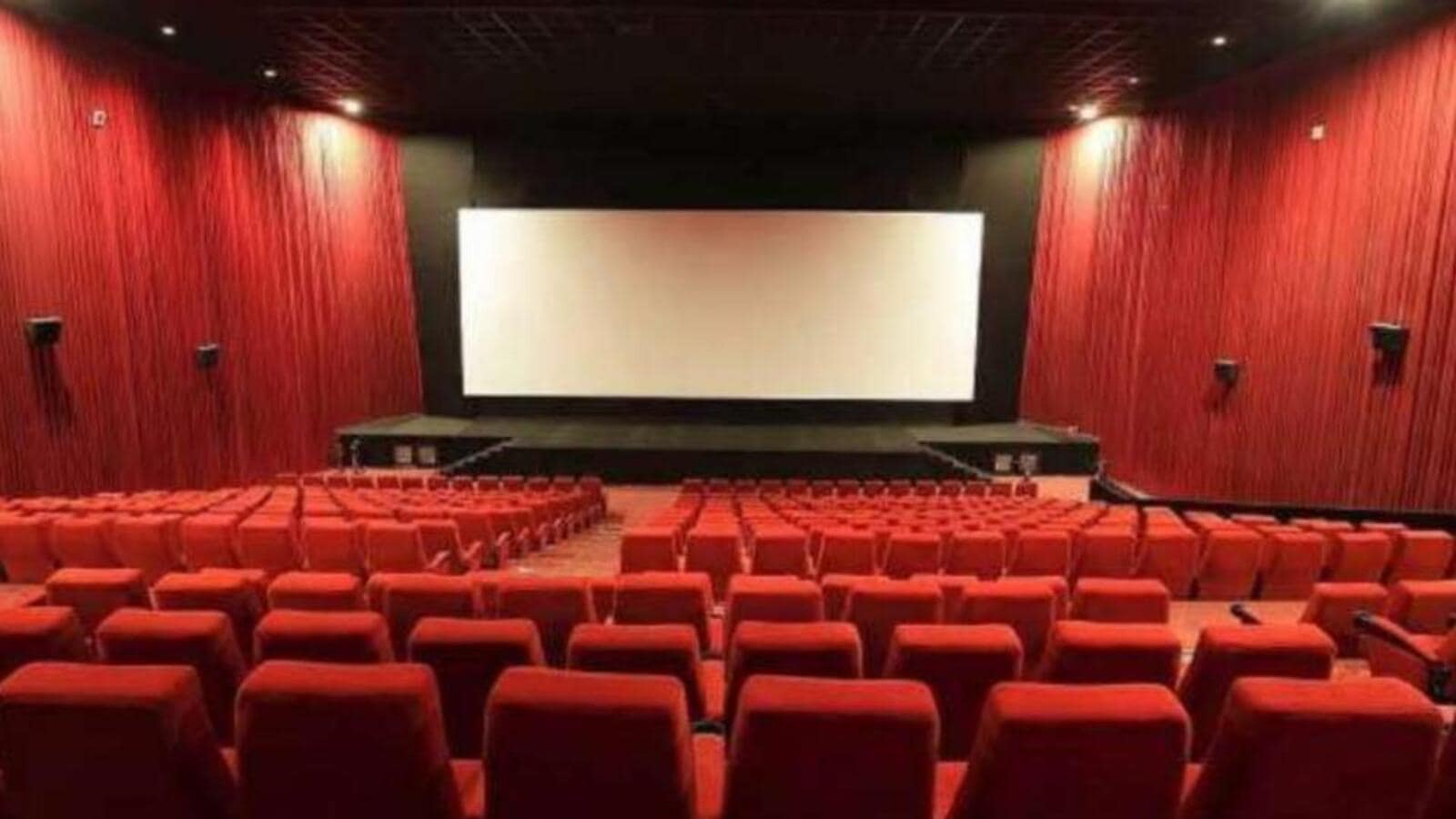 |
New
experiences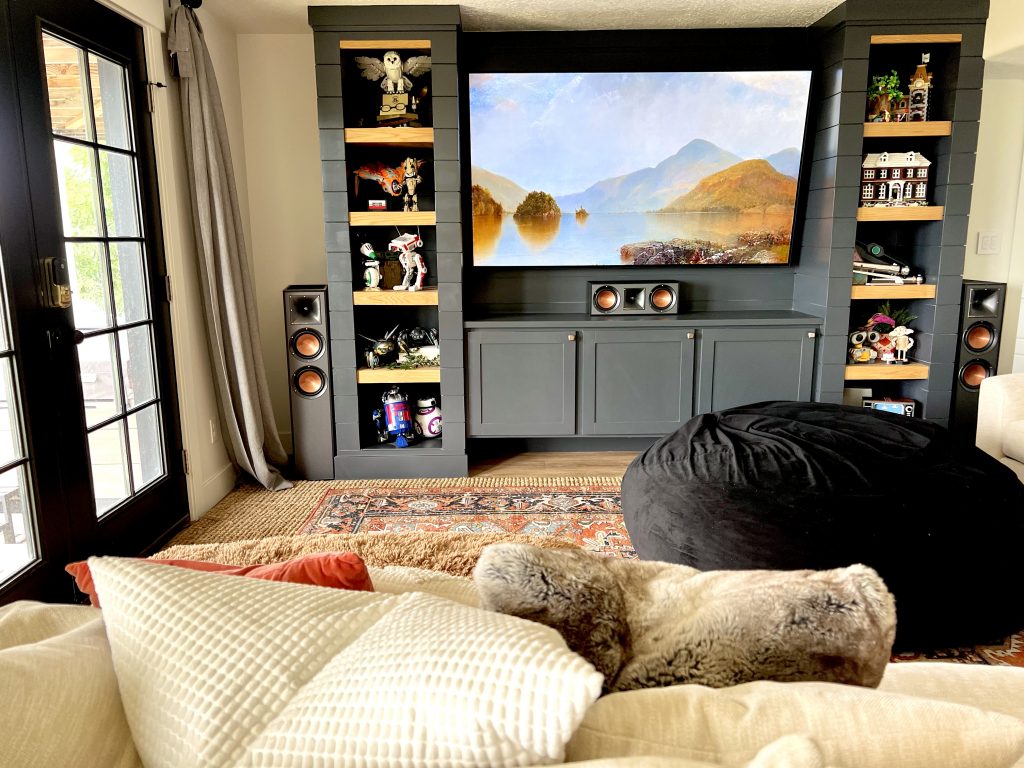 |
| - going to a designated physical venue (the cinema), choosing (where and when possible) a film from those on offer, and adhering to the scheduled times | - staying at home, but also choosing where to watch thanks to the
portability of devices (e.g. tablets, smartphones); choosing which film
to watch at a time of your choosing |
| - pay for a
ticket for the specific film chosen |
accessing free or paid content
(for example, via a subscription to a TV channel or a streaming
platform), with the option to ‘rent’ a film for a certain period of time
(pay-per-view) |
| - enter an environment specifically ‘dedicated’ to watching films (almost total darkness in the auditorium, no noise other than the film’s soundtrack), with viewing quality varying depending on the auditorium, though this cannot be controlled by the viewer; | - choosing the setting, usually a
‘non-dedicated’ space (e.g. your own living room), arranging the
conditions where possible (armchairs, lighting, distance from the TV,
etc.) without being able to eliminate distractions (such as a ringing
phone, someone knocking at the door, children’s needs, etc.); the
ability to adjust various viewing settings (such as screen format and
brightness, sound volume, connection to a hi-fi system or home cinema,
etc.); obviously, watching on a portable device offers even greater
freedom (though with corresponding limitations, such as screen size and
the myriad distractions that can arise from both the device itself and
the environment in which one finds oneself, for example a railway
station or on board an aeroplane) |
| - watch the
film ‘in one go’, within the time corresponding to the film’s duration,
at the end of which one usually proceeds towards the exit (subject to
the possibility of staying and watching the film again...) |
- deciding whether to watch the
film in one go or with breaks, with the option to ‘skip’ a scene or,
conversely, to rewatch it once or several times, and also to ‘pause’ to
take a closer look at a specific shot |
| - remaining
silent during the screening (apart from brief comments, with the
exception of ‘noisy’ viewers...) and limiting comments with friends,
relatives or other viewers during any ‘intermission’ or at the end of
the film. All in all, even if one ‘goes to the cinema’ with others, the
experience remains primarily an individual one (without this ruling out
the possibility of sharing the experience with others) |
- freely discussing the film with
anyone else present at any point during the screening; continue
discussing the film even after it has finished via social media,
messaging services, websites, etc. If desired, the experience can take
on a more social dimension by sharing it with other viewers and other
‘audiences’, even those who are far away in space and time |
The same ‘traditional’ cinema experience, which is still available today, has evolved over time, particularly with the rise of multiplexes – complexes comprising several screens, often located in shopping centres. This means you can choose the film, the screen and the start time in advance, or simply go with the flow and decide on the spot from the various films on offer. Even in this case, however, the cinema experience often no longer corresponds to the ‘classic’ one (perhaps that of the local cinema): people continue to ‘go to the cinema’ but within much more flexible spaces and times, where the ‘sacredness’ and the "rituality" of the traditional viewing experience have been lost and the experience can be linked to others, such as having lunch or dinner at a restaurant, shopping, going to the hairdresser’s … where watching the film becomes part — and not necessarily the most important part — of a varied approach to leisure time.
Finally, we note that these new viewing modes also entail new roles for the viewers themselves: it is no longer, in fact, simply a matter of watching a film, but of participating in the ‘adjustment’ of the viewing experience, whether by operating the devices (think of the options offered by DVDs, which require pressing certain buttons on the remote control, or by adjusting the volume, the screen brightness, etc.), or by ‘adjusting’ the surrounding environment, which becomes an integral part of the experience itself. The traditional ‘cinematic setting’ (the cinema auditorium) no longer exists, and the television (or home cinema system) effectively transforms the viewer into a supporter (of a football match), a fan (of a music concert), a participant (in a debate), and so on.
2.2. A process of change that has been a long time coming
| "The crisis brought about by the emergence of digital media is not the first upheaval to rock the cinematic realm. It must be said and repeated over and over, tirelessly: cinema’s entire history has been punctuated by moments when its media identity has been radically called into question. What people have called “cinema” for over a century has seen a series of technological mutations throughout its history. Whether when sound arrived or widescreen formats were introduced, to mention just those two examples, every new technology has, in its own way, gradually and lastingly turned upside down the way in which films are produced and distributed, along with their reception by viewers." (Note 3) |
Although audiences soon became accustomed, even without realising it, to new forms of the ‘cinematic experience’, changes in viewing habits and practices have been a constant feature throughout much of the history of cinema. It is no coincidence that, at the very moments when these changes were taking place, the ‘death’ of cinema was often predicted – yet, on the contrary, cinema has always been able to react swiftly, redefining its relationship with its ‘audiences’ in line with the new demands that arose.
The ‘cinema’, for example, understood as a dedicated venue intended exclusively for the screening of films, was not, in the early decades of cinema’s existence, a defining feature of the new medium: the first public screening for which an admission fee was charged took place on 28 December 1895 at the Salon Indien of the Grand Café in Paris; and until around 1905–1910, films were screened in a variety of venues, which were also used to host performances of various kinds (from vaudeville to café-concert), so that the ‘film’ (or rather ‘films’, as these were often very short clips shown in sequence) constituted a sort of ‘semi-finished’ or ‘semi-processed’ product, This was essentially due to the fact that the ‘manufacturers’ sold ‘packages’ of films to the exhibitor (the cinema owner), and the latter acquired all the rights, including the decisions on when to show them, in what sequence, and for how long, etc. The exhibitor also decided on any musical accompaniment, in keeping with the ‘multi-purpose’ nature of these venues.
The arrival of a train at the La Ciotat station/L'arrivée d'un train en gare de La Ciotat (Auguste e Louis Lumière, France 1895)
A further step towards the emergence of cinemas dedicated solely to films came with the advent of the so-called nickelodeons, named after the cost of the ticket (‘a nickel’, i.e. 5 cents) required to enter the venue (from the Greek ‘odeon’, meaning a covered venue designed to host various kinds of performances). Often converted from shops, these cinemas had a somewhat ‘makeshift’ feel, a small capacity and a continuous programme of short films (lasting 15–20 minutes in total). The nickelodeons were an important stage in the evolution of cinema as a popular and affordable form of entertainment, aimed primarily at workers and immigrants in large urban centres. They marked the end of cinema’s earliest phase as a ‘quasi-sideshow phenomenon’, creating a stable market which, within a few years, would lead to a growing demand for more films, and above all for feature-length films.
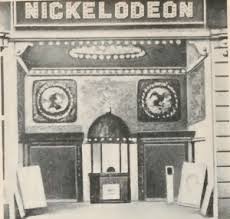
The decline of nickelodeons in the mid-1910s was due precisely to a shift in demand, which led to the construction of large cinemas, and to the subsequent emergence of film studios and the role of the ‘producer’ – a key figure in the process of industrialisation and institutionalisation. Closely linked to this development was the evolution of cinema both as a new, autonomous medium, distinct from the other media within which it had initially emerged, and as a cultural and social practice (the act of ‘going to the cinema’, which would dominate much of the 20th century. As can be seen, the production and commercial aspects have always been linked to the evolution of audiences: thus ‘cinema’ emerged as it was understood (and as it still is to some extent) within popular culture. Parallel to (and an integral part of) this evolution, however, was also the aesthetic development of the ‘film’: from a passive ‘filming instance’, such as the Lumière brothers’ fixed camera, there was a shift towards a decidedly more narrative (fiction) approach, with editing serving to hold together and define a story experienced by characters.
In the late 1920s, the introduction of sound was greeted with enthusiasm by the public, but with apprehension by filmmakers, and in particular by actors, whose voices were sometimes found to be unsuited to the new requirements. And there were also those who, in defence of silent cinema, predicted the ‘death’ of the new cinema. However, perhaps the most significant change in the decades that followed came, around the mid-1950s, with the advent of television. For the first time, ‘cinema’ no longer meant ‘going to the cinema’, because entertainment was coming directly into people’s homes. The choice might have been limited, at least initially, by the presence of a single channel, but the advantage of being able to stay at home, saving time and money, was undeniable, especially with the development of new suburban residential areas, far from the city centre, typical of post-World War II America. Perhaps, however, even more than the television set itself, another element became part of the new ‘television’ cinematic experience: the remote control. This simple object truly revolutionised viewing habits: it was now possible, at least within certain limits but, as time went on, in an increasingly decisive way, to choose what to watch, to pause viewing, to switch to something else (channel-hopping), to perhaps rewatch a film shown again but at a different time, and so on.
The “film industry”, understood as an entertainment industry, immediately took action, seeking to offer elements that television was not (yet) able to provide: the responses to the threat posed by television were thus large screens (such as Cinemascope), colour (with the improvement of systems such as Technicolor), and sound (with the spread of high-fidelity systems). Other innovations were short-lived, such as three-dimensional viewing (3-D, which required the use of special, rather uncomfortable glasses), ultra-wide formats such as Cinerama (available only with special, extremely expensive curved screens) or very brief innovations (such as Odorama, i.e. the release of scents at specific moments in the film...). All in all, cinema managed to withstand and counter the competition from television, also focusing on spectacular blockbusters which, like Ben-Hur (William Wyler, 1959) or The Ten Commandments (Cecil B. DeMille, 1956), offered sights and thrills impossible to reproduce on the small screen (although not all these costly mega-productions were successful: one need only recall Cleopatra (Joseph L. Mankiewicz), which, despite the magnificence of its sets and stellar cast, nearly ruined its producers...).
Cleopatra (Joseph L. Mankiewicz, USA 1963)
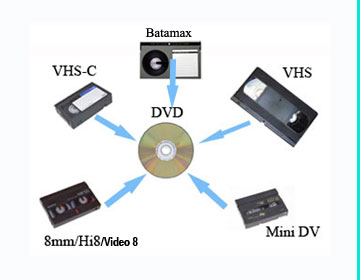
In the decades that followed, further, continuous technological developments paved the way for ever-new viewing experiences which, although they did not have the same immediate impact as television, gradually but unmistakably shaped the public’s habits and behaviour. Tape recordings, with the eventual establishment of the VHS format, now made it possible both to hire (through retail chains such as Blockbusters) and to purchase films, which could be played on video recorders (which, in turn, also allowed films to be recorded from television channels, at least from those broadcast free-to-air). A few decades on, the impact of the spread of magnetic tapes cannot be underestimated. Viewers now enjoyed further freedoms: pausing the viewing, resuming it, rewinding, fast-forwarding, ‘freezing’ a shot using the ‘pause’ function, etc. – as well as, of course, being able to choose where and when to watch the film. Whereas until then it was the viewer who ‘went to the cinema’, now the cinema came directly into their home, allowing, amongst other things, film enthusiasts to build their own private ‘video library’ (something previously reserved for the few who could afford expensive equipment (projectors, screens, speakers) to handle celluloid films. Within a few years, the DVD made its appearance, followed by the Blu-ray, formats which, thanks to digital technology, through which both the viewing experience and the range of available options improved dramatically: in addition to everything that video cassettes already offered, viewers could now choose from a selection of languages and subtitles, viewing formats, and the chapters into which the film had been divided; furthermore, thanks to the increased storage capacity of the new media, they could access additional content alongside the film itself: for example, trailers, interviews, ‘making-of’ features (short documentaries on the film’s production), director’s cuts and/or actor-commented versions, and much more. The quality offered by digital technology was set to improve continuously and rapidly in the years that followed, with ultra-high-definition video formats (such as 4K or 8K) and high-fidelity audio formats (such as the Dolby System and its successors) – technological developments that obviously required suitable devices, the cost of which varied but which were generally accessible to a wide section of the public.
2.3. The digital "revolution"
The other major technological innovation with a disruptive impact came, somewhat more recently, with the shift from physical media (such as DVDs) to virtual availability via the Internet. Alongside the more traditional cable and satellite television channels, whether free-to-air or pay-TV, streaming has thus established itself, allowing viewers to break free from physical media and access multimedia content directly from well-stocked online video libraries hosted on digital platforms (such as Netflix, Prime Video, Disney+) and viewable, of course, not only on televisions but also on computers, tablets, smartphones, and so on.
‘The show must go home’
To paraphrase this American saying, we could say that the cinema experience now continues, but in the comfort of one’s own home ... Viewers have increasingly freed themselves from the constraints of traditional ‘cinema’: from ‘going to the cinema’ on a specific day and at a specific time to watch a single film, we have now moved on to managing our own viewing at home or in any other location, at our own convenience, with the ability to choose from a myriad of content that is always immediately available. It has been and continues to be a process of the ‘desacralisation’ of cinema (films are now ‘in the hands’ of anyone), of ‘dematerialisation’ (film has been replaced by a digital file) and of ‘dissemination’ through the availability of a variety of devices.
This has led, amongst other things, to the reuse and re-evaluation of older films; and just as television did – having, from its very beginnings, been able to rely on broadcasting films that had already been shown in cinemas, sometimes a long time before – streaming now also provides access not only to the latest releases, but also to the vast heritage of cinema history (although not everything is obviously available, and many films have been lost or may be the subject of commendable restoration initiatives – the long-term preservation not only of films on celluloid but also of those in digital format remains a problem that has only been partially resolved, as digital technology in itself offers no absolute guarantee of security in this regard).
2.4. The remains of cinema theatres ...
Given the rise of ‘private’ viewing practices such as those we have described, one wonders what impact all this has had on theatres. Cinema operators have long been concerned about falling box office takings, and the COVID-19 pandemic of the early 2020s, with its enforced lockdowns, seemed to deal the final blow to this already critical situation. Yet, all things considered, cinemas have held their ground: whilst suburban cinemas and small-scale distributors (such as the so-called ‘art-house cinemas’) have almost entirely disappeared, the cinema-going experience today relies primarily on the existence, as already mentioned, of multiplexes, which offer flexible and varied programming and comfortable viewing environments (armchairs, digital projectors, large screens, high-fidelity sound, etc.), competing, as far as possible, with watching films in one’s own living room. Cinema and home viewing, therefore, are not exactly alternatives: at the ‘cinema’ one can (must?) watch major blockbusters, spectacular animated films such as the Avatar series, the (few) 3D films, science fiction sagas and superhero films that dazzle with the richness of the most advanced special effects – all film genres that are at their best, of course, on a large or very large screen and with high- or ultra-high-fidelity audio/video systems (such as the IMAX format, though not available in all multiplexes).
There therefore remains a distinct place for cinema-going, with audiences (at least those who haven’t entirely given up on ‘going to the cinema’) seemingly still keen to decide whether and when to visit a cinema rather than limiting themselves to home viewing. It is no coincidence that some films continue to break box office records (the recent Italian case of the comedy Buen Camino (Gennato Nunziante, 2025) is a testament to this, as the highest-grossing film of all time in Italy). Nor should we forget that film distribution agreements often stipulate an initial cinema release, followed by a DVD/Blu-ray release, broadcast on pay-TV channels, and finally a release on streaming platforms (though not always in that order). The ‘gaps’ between one stage and the next are narrowing, however, even though (blockbuster) hits are often initially available only in cinemas. In other words, viewers must ‘navigate’ between all these viewing experiences, choosing whether and when to watch a film based not only on their own preferences but also on the limitations imposed by distribution channels.
But whilst films are increasingly tending to ‘migrate’ towards other devices and distribution channels, cinemas, for their part, are also welcoming other types of performances as ‘immigrants’; these, originally intended for quite different channels, find an additional market outlet in cinemas. Thus, concerts, ballets, operas, theatre performances, sporting events and other forms of entertainment find a home on the big screen, whether via a ‘live’ or recorded broadcast. This also gives rise to new ‘hybrid’ forms of entertainment. For example, a theatre performance cannot be experienced in a cinema in the same way as it would be ‘live’. The recording of the play is not ‘neutral’, that is, it is not a ‘passive copy’: it is not a matter of positioning the camera in a fixed spot for the entire duration of the performance (much as the Lumière brothers did at the start of their experiments). Filming, on the other hand, gives rise to a new product, which is the result of choices of a more purely cinematic (and/or televisual) nature: a directorial effort, with multiple cameras allowing for different shooting angles and varying shot sizes, and editing often in real time, Thus, whilst the theatregoer occupies a fixed position in the stalls, the viewer of a performance recorded elsewhere and projected onto the big screen in a cinema benefits from different points of view, corresponding to the variety of images made possible through editing – in a sense, this experience (a ‘cinematic event’) thus comes close to the cinematic experience in the strictest sense. But does this digital broadcast cinema, or cinema that screens content sent from an external source, give rise to a new film format? This hybridisation of formats and experiences opens up original and interesting perspectives on how cinema (understood as an environment, i.e. as a cinema auditorium) integrates with other multimedia forms ... and vice versa.
2.5. The problem of distribution
Issues related to distribution have given rise, in recent years, to discussions and heated controversies, culminating at the 2017 Cannes Film Festival, where Netflix was refused permission to present its films because they were intended for the platform, with Netflix then deciding to withdraw its productions from the event. Underlying these disputes are not only high-stakes commercial considerations, but also, more fundamentally, the question – which may seem theoretical but is of great relevance to filmmakers and to those interested (and concerned) about the future of cinema in general – whether a film produced for streaming on a platform should still be considered a ‘film’, in the traditional sense of a product intended, in principle, for viewing in a cinema. The distribution landscape, however, remains in flux, partly because Netflix (and other platforms) have now effectively become producers and financiers in their own right, thus aiming, in a sense, to ‘bypass’ cinemas, backed by catchy slogans such as ‘Netflix loves and supports cinema’ or ‘Netflix is cinema’ ...
Another innovative development is the collaboration between Netflix and major filmmakers such as Martin Scorsese (The Irishman, 2019), David Fincher (Mank, 2020) and Alfonso Cuarón (Roma, 2018), who were funded by the platform, as well as Jane Campion (The Power of the Dog, 2021). The latter film was made available exclusively on the platform, with the exception of a few cinema screenings – in other words, cinema viewing has become an option, certainly not the norm. And at the 2022 Venice Film Festival, no fewer than four films produced by Netflix and directed by filmmakers considered to be leading auteurs were screened: Blonde (Andrew Dominik), Athena (Romain Gavras), Bardo (Alejandro González Iñárritu) and White Noise (Noah Baumbach) – a sign that acclaimed directors can now find financial support from streaming platforms without, however, sacrificing their creative freedom.
The power of the dog (Jane Campion, UK-Australia-New Zealand-Canada 2021)
Paradoxically, however, as evidence of how distribution issues cut across all channels and are subject to constant change, even the platforms have been forced to diversify their offerings; for example, by providing subscriptions with or without adverts (obviously at different prices), and by scheduling a variety of content (including game shows and other variety programmes) “live” (live streaming) at scheduled dates and times, sparing the viewer the trouble of having to choose … thereby contradicting what the platforms cited as their flagship feature, namely the provision of a vast range of content from which to choose freely. Are the platforms set to become, at least in part, like a television channel? And to what extent does the fact that they are becoming content producers themselves bring them closer to more traditional sources, primarily Hollywood studios? Director David Cronenberg has confessed, for example, to having knocked on the doors of Netflix and Amazon without success: “They remain very conservative; it’s not that different from a Hollywood studio. I thought they were different, but at the end of the day… they too think in mainstream terms.” (Note 4)
3. Film and its status in new cinematic experiences
In the face of all these changes, some more radical than others, in viewing habits, we might ask ourselves a couple of far more complex and ambiguous questions:
- Is a film, which is now produced and distributed on digital media, still the same as it would be in an analogue version? (Let us recall the aforementioned contradiction in terms inherent in the expression ‘digital film’: a film, understood as celluloid, is only analogue; a film, understood as a product, can be – and is now almost always – digital as well);
- Does the experience of watching a film ‘at the cinema’ lead to a different form of engagement (understanding, interpretation, evaluation) compared to all the other forms of cinematic experience we have described so far?
Regarding the merits and demerits of analogue media compared to digital, the debate has mainly involved ‘insiders’ (filmmakers, producers, critics, academics, and so on). The general public, in fact, has access to the film in its final version (whether watching it in the cinema, on DVD or via streaming), and is normally unaware of the production difficulties the film itself may have encountered. In other words, viewers do not know (nor do they usually ask themselves), for example, whether the film was shot on film and then transferred to a digital format (the reverse also happens, albeit more rarely) or whether it was shot directly using digital cameras, whether the editing was done digitally, or whether it is screened in cinemas using digital projectors (as is now the norm). Viewers generally (with the usual exceptions) have quickly become accustomed to increasingly high-quality viewing experiences (it would suffice to watch the same film on a video cassette ...) and do not realise just how much the digital format and medium actually influence the final result: for them, the film is simply what they see on the screen in the cinema or at home. Behind the scenes, however, as mentioned, there is a debate – at times a heated one – amongst ‘insiders’, to which we shall return later.
More relevant, at least from the point of view of the cinematic experience - that is, what the viewer actually experiences whilst watching a film—is the second question: do we perceive the film, understand it, feel moved by it, interpret it and evaluate it in the same way whether we watch it in a cinema or in the myriad other settings where it is now accessible?
It is difficult to provide a definitive answer to this question precisely because the cinematic experience one chooses to have involves a multitude of subjective and environmental factors that do not, however, affect traditional cinema viewing. Bearing in mind the factors outlined in the table in section 2, the cinema environment is specifically and exclusively equipped for viewing a multimedia product (not just films, since, as we have said, some cinemas screen, for example, live or recorded theatre performances, operas, ballets, sporting events, etc.). Cinemas can vary greatly in terms of the quality of the experience they offer, but, generally speaking, the environmental conditions (near-total darkness, (relative) silence, a well-positioned screen, and speakers arranged according to specific criteria) are optimised to encourage (or, if you will, compel) the viewer to focus on the video and audio being played, for the entire duration of the film, without interruption or distraction (let’s gloss over the bad habits of certain viewers who simply cannot put their mobile phones down...). There is no doubt that this concentration, at least in theory, strongly influences the audience’s perceptual responses; they are led, without interruption, to follow the story, to identify with the characters, and to become cognitively and emotionally engaged with the input being presented. In other words, the environmental conditions of cinema viewing facilitate the processes through which the viewers construct their understanding of the film - a fundamental prerequisite for appreciating the world constructed by the film itself, for interpreting it through the interaction that develops between images/sounds and the individual mind, and eventually for evaluating it, both during and after the screening.
Obviously, these cognitive and emotional processes are stimulated by any form of viewing – it makes no sense to contrast cinema-going with other forms of viewing as two mutually exclusive extremes. Certainly, however, ‘alternative’ viewing leads to cinematic experiences that can be very different from the traditional ‘cinema-going’ experience. Environmental factors play a decisive role, as summarised in the table mentioned above: viewing conditions can limit (or at least not facilitate) the attention and concentration that we have seen are prerequisites for a productive interaction between film and viewer. The presence of a screen that is, however, not comparable in size to that of a cinema; the continued presence of the ‘television’ object within a non-dedicated space, as opposed to the ‘disappearance’ of the screen in the cinema when it is struck by the beam of light generated by the projector; the (generally) lower quality of sound effects; the presence of other people whose voices may overlap with the film’s audio, and other limitations imposed by the environment - which remains very much ‘present’ in its physicality - are all factors that can limit the viewer’s engagement. Furthermore, the extreme freedom in managing the film (with the option to watch it in full or in ‘episodes’, to pause it, to resume viewing after one or more interruptions, to adjust the video and audio to specific needs, and so on) often results in a more or less fragmented viewing experience, which undoubtedly affects the continuous and ‘holistic’ experience enjoyed in a cinema. Thanks to the ‘pause’ button, it is now possible to ‘freeze’ a shot, thus perceiving a still image, something that ‘cinema’ does not allow (paradoxically, indeed, it is precisely the impossibility for the human eye’s ability to perceive the 24 frames per second of the ‘classic’ cinematic format that makes film possible).
However, these environmental limitations also interact with the subjectivity of the viewer or viewers, whose individual differences and preferences are evident even from the moment viewing begins. Some people, for example, are generally speaking more introverted, less likely to be distracted by external factors and better able to concentrate their attention even for prolonged periods, whereas people with an extroverted disposition may be more easily drawn to potential distractions in the environment, may have shorter attention spans, and may tend to interact with others present, making comments, expressing opinions, and so on. Furthermore, more systematic and analytical people may prefer a more focused and uninterrupted viewing experience, whilst others, who tend to be more intuitive and concise, might feel the need for breaks or even just to voice their reactions aloud. In short, home viewing offers considerable freedom, though this is accompanied by significant constraints. Similar considerations apply to individual or group viewing on tablets and smartphones, and in numerous other situations, which generally tend to present challenges similar to those described here, in addition to the specific limitations of the device used for viewing.
Let us conclude this section with this passionate quote from Steven Spielberg:
“But when the experience [of the film] makes us laugh, cry, rejoice or reflect, when the lights [in the cinema] come back on, and we rise [from our seats], the people around us with whom we return to the real world no longer seem so unfamiliar. We have become a community, both in heart and spirit, in the sense that we have shared a powerful experience for two hours ... Our country, our world seems less divided, less fractured, after a congregation of strangers has laughed, cried, and jumped in their seats together, at the very same moment.” (Note 5)
4. “Cinema” in the infinite multimedia landscape
Until a few decades ago, every medium was closely tied to a specific device, which constituted virtually the only channel for transmitting its content: books and newspapers were read in print, music (in the sense of a selected track) was listened to on a record player, and films were watched … at the cinema, that is, in a specially equipped auditorium, as shown in Fig. 1.
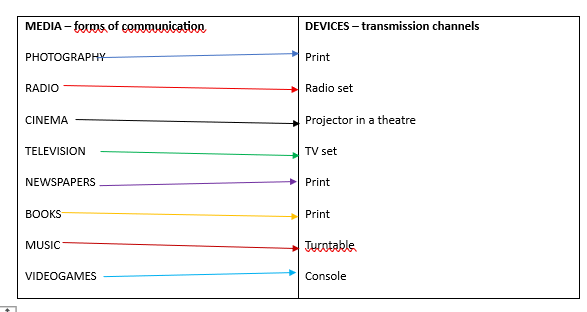
Fig. 1
Over the past few decades, this one-to-one relationship between medium and device has gradually broken down, giving way to a wide range of available options. In particular, with the advent of digital technology, many media are now accessible via a diverse range of devices: newspapers can still be bought at a newsagent's but also read on a smartphone; music can still be listened to on a record player but also on a tablet; books can still be read in print but also, as e-books, on dedicated e-readers. Films, too, can still be watched at the cinema, but also on television, on a computer or a smartphone. As shown in Fig. 2, the content of a medium is now accessible in a variety of ways, with electronic and IT devices (such as computers, tablets and smartphones) capable of ‘hosting’ media content that was once tied to a (virtually) single transmission channel.
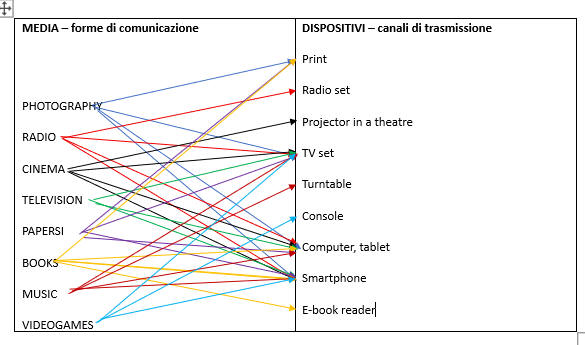
Fig. 2
It is important to emphasise that every interaction between a medium and its device (transmission channel) is not merely a ‘technological’ relationship, but gives rise to a cultural form, which is defined by the experience triggered in the user – an experience that is, simultaneously, sensory, cognitive, emotional and social. In Section 2, we saw how the cinematic experience has changed over time, precisely in terms of the cultural forms associated with it: for a long time, watching a film meant almost exclusively ‘going to the cinema’, that is, performing a series of rather ‘ritualised’ actions, whereas today it takes the form of a variety of options, each of which is a socio-cultural form in its own right: an evening in front of the home cinema system, watching a film with a friend on a tablet or on one’s own, or watching a small screen on board a plane or train.
The film remains the same in every case - but the cinematic experience of watching it can be completely different. Can we still speak of "cinema" in every case, or is the experience of the theatre so different as to justify not using this term in other situations? Thus, there has been talk of the "death of cinema" (in the aforementioned sense of "going to the movies") due to the preponderance of "other" viewings, which are increasingly becoming part of the experiences we continue to call "cinematographic." The issue becomes even more complex when we consider that "alternative" experiences to the theatre (which, as we have seen, encompass a large number of different possible viewing modes, some with highly heterogeneous characteristics) are not limited to simply watching a film, but interact with many other multimedia options. The television, for example, is not (and never has been) a device intended exclusively for "cinema," but hosts a wide variety of other content, from documentaries to advertising, from sports reports to music shows, and so on - all content that sometimes competes with the classic "film" and is always available "live," even while you're watching a film (thanks to the (infamous) "remote control," which generates infinite, alternative viewing options, but also potentially wild channel surfing...).
"Cinema," understood not only as a physical place (the theatre, where a well-defined cultural and social practice takes place, which has long remained essentially unchanged) but also as a container for specific products (films), has today lost its centrality in mass entertainment experiences: it continues to play a role, but alongside the many other multimedia offerings that complement and/or compete with it. Films can be viewed, as we have seen, in a wide range of conditions and with the aid of very different devices. At the same time, these same devices offer a highly diverse array of other multimedia products, ranging from video clips on YouTube to podcasts on dedicated platforms, from interactive videogames, including those played online, to audio and video content uploaded to social networks, to name just a few. Viewers/consumers often move easily between the infinite multimedia offerings, of which cinema remains an integral part. But it would be difficult to consider all these ways of enjoying multimedia products "cinema" (or, better yet, a "cinematic experience"). The reality is that our daily lives are immersed in a continuous flow of audio/video content that is only partially controlled by us, and in which the possibilities of conscious choices often clash with the invasiveness and persistence of this content. The result is a constant exposure to (if not always interaction with) multimedia products, which are difficult (though not impossible) to escape. While "cinema" meant (and still means) that the user moved physically, as well as intellectually, towards the film, today the film, and above all other entertainment and information products (so-called infotainment), move continuously towards us, almost like a stalker. Our lives are made up of continuous daily encounters with screens of various kinds: from our smartphones to home televisions, from monitors in stations and airports to giant public screens, from projections on the facades of buildings to surveillance cameras to installations in museums ... We sometimes talk about "expanded cinema" to refer to this hybridization of media and content – but the temptation is, once again, to preserve the uniqueness of cinema in the theatre compared to the thousand forms that films (and all other multimedia content) have now assumed in a multimedia and hyper-connected society.
It is not so much a matter of drastically contrasting the "classical, traditional" concept of cinema (i.e., watching a film in a theatre) with the cultural uses and practices in which "cinema" in its other forms is implicated. Perhaps it is appropriate to imagine a continuum in which, at one extreme, we certainly have cinema in a theatre and at the other the possible configurations of "cinema" that technology will make available in the future—with all the current configurations of a hybrid cinema in between, which is defined by the uses and contexts in which it is involved (Fig. 3).
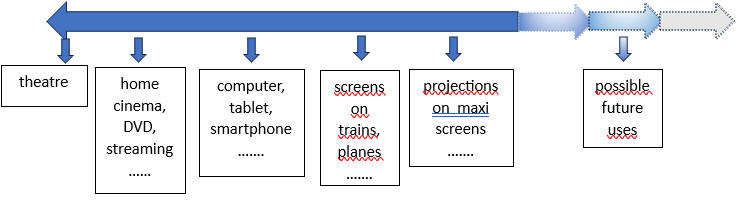
Fig. 3
Ultimately, it is difficult to accept that any moving image is cinema in and of itself. It is no coincidence that many cultural institutions that have long been involved in cinema have chosen to change, or rather, adapt, their names, as has the French CNC: "Centre nationale du cinéma et de l'image animée" (National Centre of Cinema and the Animated Image). There is a clear tendency to still consider cinema as an original medium within an increasingly "expanding" multimedia landscape. Academic research, too, is tending to reshape itself in terms of greater inclusiveness of its subjects of study: alongside classic disciplines like film studies or cinema studies, we thus find institutions that take visual culture, for example, as their object of study, thus emphasizing the new centrality of images in an evolution that is very much characterized by its visual (or audiovisual) nature.
5. The death (and life) of cinema as a medium and as a cultural product
"Thirty -five years of silent cinema is gone, no
one looks at it anymore. This will happen to the rest of cinema. Cinema is
dead." Peter Greenaway (2007)
"Cinema ... is more alive than ever, more multiple, more intense, more
omnipresent than it has ever been." Philippe Dubois (2010) (Note 6)
In light of all the considerations made in the previous sections, we can now interpret more specifically the assertions, such as those above, that declare cinema "dead" rather than "more alive than ever." At the root of these obvious contradictions is perhaps a different meaning attributed to the term "cinema". Cinema as a medium, that is, as a method or process for the expression of meanings, is certainly not dead - as we have discussed extensively, Philppe Dubois refers to this meaning. What has died (or is in a strong, perhaps inescapable crisis) is cinema as the dominant, if not hegemonic, form of the cultural and social landscape we have known throughout the last century, namely classic narrative cinema, what Greenaway describes as "... antiquated ideas about storytelling, sitting in the dark, Hollywood-centric bookstore cinema" (Note 6), that is, a cultural form closely linked to viewing in a dark room, by a rather "passive" spectator. And Greenaway continues: "All these new languages will definitely give us, soon, I wouldn't say “cinema”, because I think we'll have to find a new name to define it, but cinematic experiences." To (at least try) to dispel any ambiguity, these new forms (or, as the British director says, languages) that have populated the multimedia landscape for several decades should now no longer be called "cinema", but, with a more general and comprehensive term, "cinematic experiences" (as we also suggested in the previous sections). In other words, if cinema for a long time has had the "exclusive" power to manage "moving images", and in particular the dominant narrative modes associated with it, today it can no longer boast this centrality, "moving images" being now, as we have seen, omnipresent in a myriad of forms.(Note that the centrality of cinema as the exclusive domain of moving images has actually been in crisis for a long time, at least since television assumed its central role in offering a wide range of content, including, of course, films.)
Naturally, along with the questioning of classic narrative forms (with Hollywood for a long time at the centre), the ways of audience reception have also changed - they no longer coincide only (or predominantly) with collective vision in a theatre The mechanisms and channels of film distribution have become complex and multiple, creating new viewing habits, which a director like David Lynch describes, with a bit of pessimism and nostalgia, justifying his decision to distribute his film INLAND EMPIRE himself:
"I love the movie... But cinema theatres are dying. DVD sales are declining, everything is going on the Internet, and my movie found itself caught in the middle. Plus, it's three hours long, and no one understood it ... The perfect projection, the one in a quiet room, with good sound, is how you can truly enter the universe of a film ... What a shame ... it's the disappearance of a collective experience." (Note 7)
And, echoing the discussion already made about the differences between theatre view and "other views," Lynch also clearly stated:
"If you watch the film on a phone, you will never experience the film itself in a billion years. You will think you did, but you will be deceived. It's so sad that you think you've seen a movie on your fucking phone. Wake up." (Note 8)
This argument has been taken up several times, for example by the American essayist Susan Sontag:
"The conditions of paying attention in a domestic space are radically disrespectful of a film ... To be "kidnapped" [by a movie] you must be in a theatre, sitting in the dark among anonymous strangers ... If cinephilia is dead, movies are dead too ... If cinema can be resurrected, it will only be through the birth of a new kind of love for cinema." (Note 9)
and from Raymond Bellour:
"The screening of a film experienced in the theatre, in the dark, for the expected time of a more or less collective performance, has become and remains the condition of a unique experience of perception and memory, which thus defines its spectator, and which any other viewing situation more or less alters." (Note 8)
6. Digital developments in filmmaking
“In digital cinema, filming no longer represents the end point, but only raw material to be processed on the computer, where the actual construction of the scene will take place. In short, production becomes just the first phase of post-production.” (Note 10)
"In digital filmmaking, shot footage is no longer the final point but just raw material to be manipulated in a computer where the real construction of a scene will take place. In short, the production becomes just the first stage of post-production." (Note 10)
6.1. Digital in all stages of processing
It has been said that the "revolution" or, from a
different perspective, digital "evolution" remains, all things considered,
indirectly and barely perceptible to the viewers, who today, as yesterday,
attend a show (and, hopefully, immerse themselves in it) enjoying what remains
the "magic" of cinema, that is, its ability to evoke worlds and narratives that
engage and excite. But from the point of view, not of consumption, but of
production, the last decades have been affected by major changes, of which
digital has constituted the fundamental paradigm, and which we will try to
briefly summarize.
The transition from film to digital files has first of all allowed us to have almost unlimited space available for filming. When Hitchcock filmed Rope (1948), to achieve the effect of temporal continuity (the film's running time was intended to reflect the actual duration of the events narrated), he could not create a single long shot, that is, a single sequence, without cuts in editing, simply because film reels had a maximum running time of about ten minutes, after which the reel had to be changed. To overcome this drawback, the director filmed the various sequences separately, but, during the editing phase, he combined them together, hiding the moments of "junction" through various ingenious devices (for example, making a cut coincide with the shot of a character's shoulders). In this way he obtained a sort of false long shot in which the cuts remained (almost) imperceptible to the spectators, who therefore obtained the sensation of a single, long sequence that coincided with the duration of the narrated events.
Today this problem has long been overcome: recording devices store images on enormously large hard discs - no longer a consumption (or waste) of expensive film, but a digital space that is almost limitless, and much cheaper. This basic fact has had crucial consequences for the entire process of filmmaking. With analogue systems, the "exposed" film was, at the end of the day of shooting, passed to the laboratory which obtained the negative: only the following morning was it possible to see the dailies (or daily rushes), that is, what had actually been shot the day before, in order to evaluate it and proceed with new shots if necessary. Today, digital cameras immediately allow you to control the footage (pre-visualization), now stored in a file that can be managed and manipulated in a variety of possible ways depending on the purposes. You can then take a number of shots of the same scene or sequence, and then choose the ones you think are best. We have gone from the enormous limitations of film to an almost infinite amount of available data, so much so that we can talk about an excess of data (and images) - data that, however, then need to be managed, thus creating, in a certain sense, new problems. (Note that Artificial Intelligence plays and will play an important role in selecting this "bulimia" of data.)
"With film, there was a dissociation between filming and post-production. Today, post-production is poorly defined because when you say "Engine... Action" with digital, we are already in post-production ... Digital file management is totally different from film management." Jeanne Marchalot, post-production director (Note 11)
But all the classic stages
of filmmaking (from pre-production to production (shooting) to post-production)
have been upended by new technological possibilities. Consider, for example, the
storyboard:
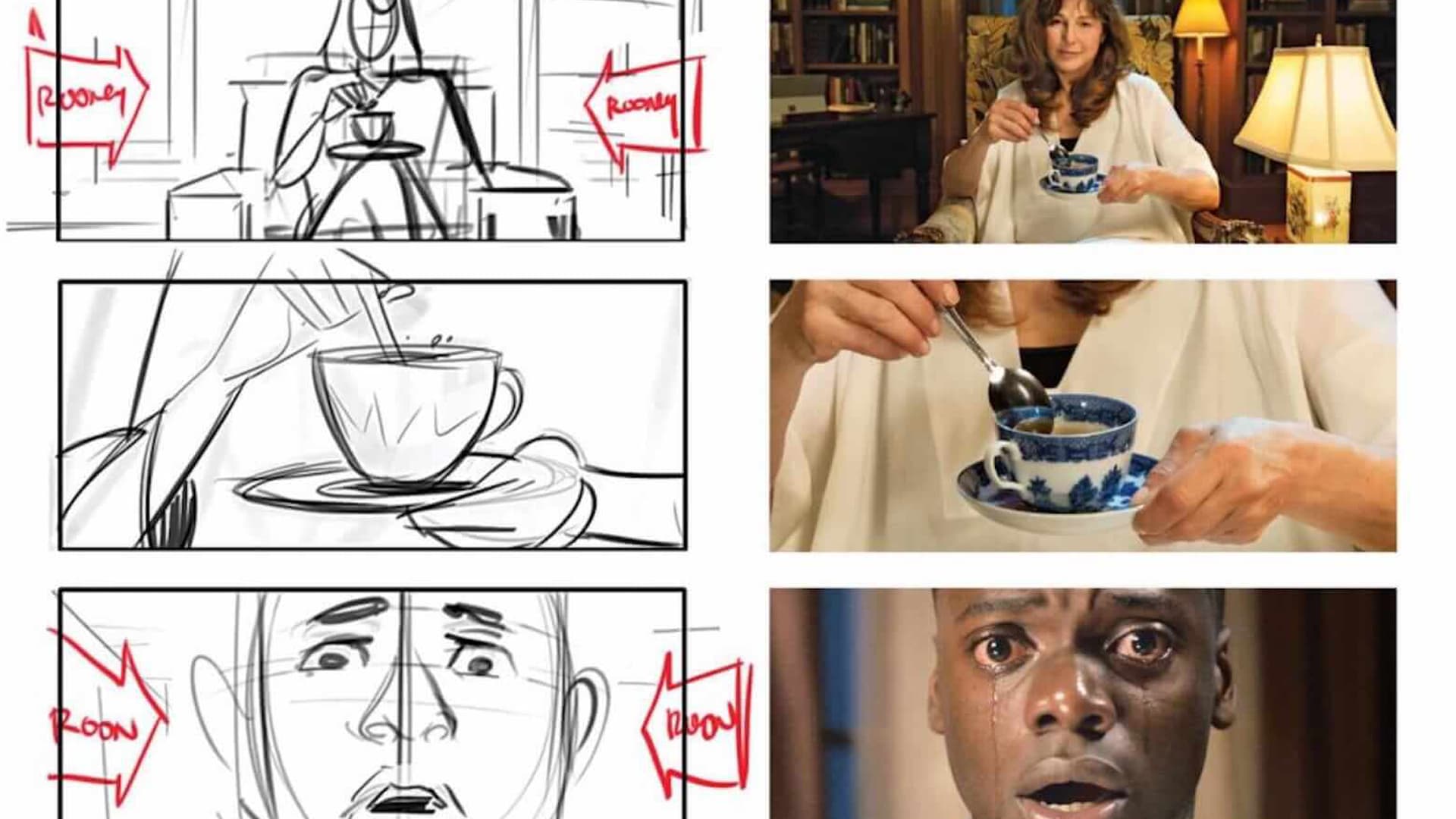
It is a sequence of drawings and illustrations that visualize the key scenes of a film, highlighting the actions and movements of the actors, and which serves as a "bridge" between the screenplay and filming, allowing you to save time and resources. Storyboards, which have always been made on paper, are now produced digitally. Who knows how happy Hitchcock would have been - he attributed fundamental importance to this instrument, so much so that he himself contributed to its creation:
"I always make films on paper ... And when I start shooting the film, for me, it's already over. So much so that I would hope I didn't have to shoot it. I have it all in my head: subject, shots, dialogue, everything ..." (Note 12)
And Spielberg, to create his Indiana Jones and the Kingdom of the Crystal Skull (2008), used a digital storyboard that included a three-dimensional "modeling", very effective in (pre)visualizing action scenes.
The same shots can now be obtained using techniques unthinkable until a few decades ago, particularly the so-called motion capture, which allows the body of a moving actor to be "captured" and integrated into the digital set. And in performance capture, it is even possible to capture not only movements, but also facial expressions, glances, and so on:
"Performance capture allows us to retranscribe not only physical movement, but also an actor's performance, whose body is covered with photosensitive sensors from head to toe. Added to these markers, which allow the 200 special cameras overlooking the film set to create a moving digital skeleton, onto which animation specialists can graft a digital skin and a synthetic avatar, is a small digital camera, which allows the actor's facial performance to be retranscribed as faithfully as possible." Jean-Baptiste Massuet (Note 13)
By using performance capture, which produces images that are certainly different from actual shots, a film tends to get very close to the other major family of moving images, namely animation - instead of "animated drawings" we have as a result images of "real" origin but in fact heavily manipulated by the computer. And thanks to Artificial Intelligence, this manipulation continues to develop in directions until recently thought impossible, such as the digital rejuvenation of actors' faces, as for Al Pacino, Robert De Niro and Joe Pesci in The Irishman (Martin Scorsese, 2019).

or for Harrison Ford in Indiana Jones and the Dial of Destiny (James Mangold, 2023) and even the "cloning" of bodies and voices of past actors resurrected in this way, as for Peter Cushing in Rogue One: A Star Wars Story (Gareth Edwards, 2016).
Editing, which was an essential stage of post-production, can now also take place directly on the same recording device, which can offer a variety of shots as well: the same scene can actually be shot in all its aspects, from several angles, from several points of view, with the use of different lenses, with different performances by the actors, and so on. And the whole thing can be immediately visualized, and if there are problems, you can repeat the same process, potentially endlessly. Emmanuel Lubezki, chief cameraman in Alfonso Cuaron's film Gravity (2013) well expressed this radical change:
"Before ...I used previsualization as it is normally used, that is, as an
improved storyboard ... Now, in the case of Gravity, previsualization
has become the film, a bit like [a] Pixar [film] [the famous production company
specializing in digital animation]. (Note 11)
6.2. An illuminating comparison: the case of Psycho
To realize how much new digital technologies are
impacting the possibilities offered to filmmakers, consider the opening sequence
of Psycho, directed by Alfred Hitchcock in 1960, with Gus Van Sant's
1998 remake. Van Sant made it clear right away that his film wanted to follow
the original film to the letter, and, aside from a few updates due to obvious
changes in socio-cultural environments and contexts, his film is an accurate,
intelligent, and sophisticated "copy" of the original. To create the initial
sequence, Hitchcock had to proceed through the editing of several scenes,
achieved also thanks to cross-fades (barely perceptible) and an intensive use of
zoom, to take us from a general vision of the city to a particular building, and
from there to a window, and then linto the room where we will meet the first
characters. Van Sant was able to count, in addition to aerial shots and the use
of zoom, on digital processing, with the result that the sequence is extremely
fluid, without cuts and with only one (apparent) camera movement that from
aerial vision takes us, as in a long shot, directly inside the room.
Psycho (Alfred Hitchcock, USA 1960) Psycho (Gus van Sant, USA 1998)
6.3. New roles, new professional figures
In a certain sense, the immediate pre-visualization of the footage brings the latter closer to an already (semi) definitive version of what will be the final product, that is, the "film." This "compression" or "overlap" of the production phases also entails new roles for all the professionals involved (director, cinematographer, editor, sound engineer, and so on). The cinematographer, for example, is no longer the only person on set to choose the shooting modes. Not to mention the classic "editor," who, as we have just seen, is at least partially replaced by the possibilities of "editing during filming." And even special effects, traditionally added in post-production, can now be integrated directly during filming.
All these changes obviously have consequences for cinema professionals, for their roles and tasks, and for the dynamics of the relationships that are established among them during the making of a film. For example, whereas previously the head operator had the opportunity to follow the filming "live", now the entire team present on set can directly and personally follow the progress of the filming. This implies a different distribution of work, since the making of the film depends on the interaction of multiple professional figures (not to mention that some aspects, such as visual effects, are often "outsourced", that is, entrusted to external consultants) - ultimately, decisions are made by a series of people, to the point of not knowing who actually makes them ... and this plurality of professional figures in the production chain complicates their coordination (without forgetting that the film, as a "physical object" (if we can speak of a digital file in this way) is no longer linked to a specific place, because the same file can be processed simultaneously by multiple people in different places. All this has important consequences also, and perhaps above all, for the director: once considered as the main (if not exclusive) author of the film, his position is changing, given that filmmaking, in all its various phases, is managed not by a single man or a few professionals but by what we could call a "collective" - not to mention the increasingly massive presence of Artificial Intelligence. And especially when the production is in the hands of a platform like Netflix, which is obviously very careful to define the "film product" according to the needs of the target audiences, the director may even lose control of his film after filming. And it's not uncommon for the director to be chosen after the script and the storyboard have been finalised ...
But the implications of all these changes are perhaps even more important when we consider the nature of the "footage", what is recorded on a file. The film reel could be considered a "mirror": the analogue camera recorded, so to speak, the "reality", like an eye that takes possession of reality before itself. Now this "reality" is dissociated from the resulting filmic image, because it becomes part of a myriad of other images: consider for example the so-called "green backgrounds", which replace the scenography, and which are "filled" with appropriate content in the post-production phase. But also tconsider the changes this entails for the actors, who act in an "empty" environment, in a staging stripped of all elements of reality, and in which the actors must still give depth to their expressive resources even in the absence of the stimuli that would allow them to "immerse themselves" in the scene - even if one could argue the opposite, that is, that the very absence of environmental visual stimuli could encourage actors to focus on the most intimate and profound aspects of acting, putting their interpretations of the characters even more into focus.
We conclude this section on digital developments by recalling that, despite the absolute prevalence of digital in filmmaking, analog is by no means dead: many directors, especially those considered and recognized as "authors," and those of the avant-garde, do not forget the aspects of analog they consider positive or even superior to digital: evidence of this is films such as Killers of the Flower Moon (by Martin Scorsese), Poor Creatures! (by Yorgos Lanthimos) or Oppenheimer (by Christopher Nolan), all 2023 films, nominated for the 2024 Oscars (with Nolan's film winning the Best Picture award).
Oppenheimer (Christopher Nolan, GB-USA 2023)
7. Analogue vision vs digital vision
7.1. The problems of high (and very high) definition
Let us now return for a moment to the cinematic experience experienced by viewers.
"The Pathé Wilson cinema in Toulouse is equipped with advanced technologies, including the Dolby Cinema, which is compatible with HFR technology, and the Laser 4K. The HFR multiplies the usual projection rate by two, causing the 24 images per second to be turned directly into 48 images per second. A double number of images for heightened sensations of ultra-realism and fluidity." Promotional material of the Pathé Wilson Cinema (Note 14)
In analogue cinema, the film projected in the theatre was the result of a rather laborious chemical treatment process, which included several steps, from the initial negative to the printing of the final copy; furthermore, if the projector lamp had a low brightness, the quality was still reduced. At each step, a loss of resolution occurred, causing the viewer to "lose" part of the information encoded in the original negative. In digital cinema, since information is encoded as a series of "0s" and "1s" in a file that is not subject to chemical transformations that degrade it, there is no loss of quality - hence the clarity and sharpness of the projected image. As the Zodiac (2007) cinematographer said:
“The audience will see more than what they normally see in a movie - literally, the pores on people's faces and every hair on their heads - so it may have an almost immersive effect” (Note 15)
The typical digital technology image, clear, fluid and detailed thanks to its hgh definition, has nevertheless been criticized on several fronts. For example, journalist Philippe Berry noted that "too much sharpness kills the dream ... magic no longer works because the images are too realistic. In the indoor scenes, you can see too much that it's a movie set ... And the actors' acting seems to be closer to the theatrical one." (Note 16)
Recent technological improvements, in short, are not synonymous with increased quality of perception by viewers. For example, the fact of doubling the projection speed (High Frame Rate) could paradoxically give a glimpse of the very "artificiality" of the "cinema-machine", revealing in a certain sense the "tricks of the trade". The traditional projection speed (at 24 frames per second), on the other hand, allows the viewer's imagination to be stimulated. The viewer would be called upon to fill the "gaps" (however imperceptible) between one frame and the next, compensating, so to speak, for the shortcomings of the projection, and activating that "temporary suspension of disbelief" which is a necessary condition for the viewers themselves to "believe" in what they see - enabling them to enter the fictitious (but so "real"!) world created by the film. The higher the definition of digital images, increasingly sharper but precisely for this reason "aseptic, sterile", the more difficult it would be for the viewers to "get lost in the film", remaining in a certain sense tied to the technical device.
7.2. The question of realism and the new subjectivity
| "In the 20th century, cinema has played two roles at once. As a media technology, cinema’s role was to capture and to store visible reality. The difficulty of modifying images once they were recorded was exactly what gave cinema its value as a document, assuring its authenticity. The same rigidity of the film image has defined the limits of cinema ... i.e. the super-genre of live action narrative. Although it includes within itself a variety of styles—the result of the efforts of many directors, designers, and cinematographers—these styles share a strong family resemblance. They are all children of the recording process that uses lenses, regular sampling of time, and photographic media. They are all children of a machine vision ... The mutability of digital data impairs the value of cinematic recordings as documents of reality." (Note 17) |
The considerations just made lead us to reexamine the very nature of film photography, which, from its very beginnings, has been viewed as a “mirror of reality,” since the camera records what is actually in front of it - what the camera itself “sees” - hence the realistic quality of the images. Now, while analog filming captures actual images on celluloid, digital filming immediately transforms these images into numbers (a sequence of 0s and 1s), that is, data that can be visualised and, as we have seen, manipulated in a vast variety of ways. Images would thus lose their ‘substance’, become dematerialised and, for that very reason, be less authentic, less ‘true’, less ‘real’. Furthermore, footage shot with sophisticated digital cameras would allow for a multitude of viewpoints that are no longer limited to the eye of the director or cinematographer, but generate abstract, virtual viewpoints, in any case distant from human experience. One can see how much this might affect the nature - regarded as ‘realistic’ - of the cinema as a medium, which would no longer be limited to the ‘simple’ representation and documentation of reality as perceived by the filmmaker through the camera, but would open up new worlds, new perspectives, new ways of imagining experiences linked to fantasy or science fiction - territories which, on the other hand, comics, cartoons and, more recently, videogames, have always explored with great success.
‘The aesthetic of virtual direction, created using computer graphics, often allows us to see more, more closely, more deeply, and for longer – beyond the physical and perceptual limits imposed by human nature and the laws that govern the world.’ (Note 18)
The Hobbit: The battle of the five armies (Peter Jackson, New Zealand-USA 2014)
On the other hand, the ever-increasing availability of recording devices and their growing sophistication (combined with extraordinary ease of use) have enabled not only professional filmmakers but also ‘amateurs’ to engage in content production – users of multimedia devices are no longer merely passive recipients, confined to the role of consumers of content produced by others, but have themselves become active agents, that is, content producers – and the internet has done nothing but facilitate and vastly multiply the possibilities for distributing, sharing and expanding the new material thus produced: from the use of the simplest camera-and-microphone combination, we have moved on to the adoption of sophisticated devices ranging from smartphones to GoPro cameras, from smart glasses to drones. All these technological developments, which have in a sense ‘democratised’ the experience of content production, making it more widely accessible, have profoundly influenced the nature and quality of filming, which, on the one hand, as we have just seen, seem to be moving away from the ‘classic’ idea of cinematic realism, on the other hand, paradoxically, allow for a more direct closeness between the person filming and the person being filmed, thus creating a kind of new intimacy: in short, the mediation of these new devices makes the ‘capture’ of reality more immediate, without concealing, as ‘classical’ cinema – particularly Hollywood cinema – has always done, the very apparatus itself, but rather by ‘unashamedly’ highlighting its mechanisms and potential (from staging to depth of field, from increasingly ‘daring’ camera angles to the use of light ...).
Narrative conventions have been profoundly influenced by this: the new proximity between the subject filming and the ‘object’ being filmed fosters a more intense engagement, a new subjectivity, and almost an identification between the two entities: the subject filming thus often becomes part of the shot itself, even incorporating the object being filmed (as in selfies, where this distinction is effectively erased). And the times and places of these new narratives are also becoming more subjective: the narrative is no longer limited to the salient and ‘memorable’ moments (as if to say that cinema is like reality without the boring bits), but, on the contrary, incorporates everyday activities, ‘normal’ gestures, and a live capture of the flow of life without filters and without cuts or selections. It is often a ‘staging’ of oneself, as well as of the surrounding environment, but a staging that is immediately socialised and shared.
Cinema has long since embraced these trends, even in highly successful films.
The Blair Witch Project (Daniel Myrick & Eduardo Sanchez, USA 1999)
As early as 1999, for example, The Blair Witch Project told a story that was supposedly captured on camera by a group of young people who had ventured into a ‘cursed’ forest and met a tragic fate there. The footage was presented as ‘authentic’ (so-called found footage) and had a distinctly ‘amateur’ feel to it. Thanks to a massive online marketing campaign, the film was a huge success, but, from our perspective, it was above all proof that the distinction between ‘professional’ and ‘amateur’ footage was beginning to blur, and could even find its way into productions aimed at a mass audience. More recently, films such as Tangerine (Sean Baker, 2015), shot using three iPhone 5s, and the subsequent A Florida Dream (2017) have been a huge critical and commercial success, and bear witness both to the popularity of ‘low-budget’ filming devices that produce films capable of entering mainstream distribution channels, and to the trend of using such devices to film ‘up close’, almost like a candid camera (or hidden camera), ‘natural’ subjects and environments, 'spontaneous' and “uncontrived” subjects and environments, thereby reducing or eliminating the distance that traditionally existed between the person filming and the subject being filmed: a new kind of “alternative” realism, facilitated precisely by those technologies which, on the other hand, have at least in part called into question the "realism" of classical cinema.
The Florida Project (Sean Baker, USA 2017)
This new form of subjectivity, as evidenced by the many examples of first-person shots, is facilitated precisely by new technological devices, which tend almost to present themselves as an ‘extension’ of human sensory channels (think of smart glasses or mini-cameras such as GoPros, which allow the wearer to film practically everything they see), but which also present themselves as an alternative to those ‘impersonal gazes’ embodied by other devices such as surveillance cameras or medical imaging equipment (CT scans, MRI scans). The point of view, so crucial to cinema since its inception, thus finds new expressions, of which video games - which can be played from a first-person perspective - have long been a ‘classic’ example, now complemented by new developments such as virtual reality (VR), augmented reality (AR) and 3D headsets, to name but a few.
Finally, the contrast between high-definition and low-resolution images – which is evident even to the untrained eye – can be used as a device to introduce meaning into the narrative. Whilst the former may, at first glance, convey a sense of realism and ‘truth’ due to their richness of detail and visual precision, the latter may, paradoxically, themselves become bearers of truth, in that they are closer to the personal experience of the subject being filmed. An illuminating example is provided in Kathryn Bigelow’s Zero Dark Thirty, which recounts the mission of the American special forces (Navy SEALs) to capture Osama Bin Laden. Whilst in the first part of the film, shot in high resolution, the ‘perfect’ images allow us a rich and detailed view of the surroundings, the second part in a sense overturns this assumption, as it consists of images recorded by infrared cameras mounted on the soldiers’ helmets, and are therefore necessarily blurred and shaky. It is, however, precisely these images that draw us into the thick of the firefights, as our viewpoint coincides with that of the soldiers, placing us right in the midst of events as they unfold. Ultimately, there is no direct correlation between high- or low-definition images and the ‘truth’ of the events: high resolution may satisfy the desire for the ‘spectacular’, but in many cases it is the somewhat blurry, out-of-focus, imperfect images captured by devices such as CCTV cameras or the micro-cameras carried by soldiers that give the footage its sense of truth and authenticity.
Zero Dark Thirty (Kathryn Bigelow, USA 2012)
And speaking of the ‘authenticity’ of images, one cannot ignore the issue – made all the more pressing by the use of Artificial Intelligence – of just how much it is now possible to manipulate what are, ultimately, digital files, to the extent that it has become difficult to distinguish the real from the fake, and to (re)examine the very nature, not only of capturing or recording aspects of reality, but also (and perhaps above all) of observing, interpreting and ultimately evaluating what is seen:
"Digital images ... can so easily be faked ... and that fakery could be so sophisticated as to be unrecognizable. They threaten to sever the connection between photography and truth, between reality and its photographic record." (Note 19)
We conclude this section by noting that cinema, whether analogue or digital, is always a blend of artifice and realism – as director James Cameron so aptly and candidly pointed out when speaking about filming on a movie set:
“When was it ever real? There was [a wall here] and nothing over there. There's thirty people standing around. There’s a guy with a boom mike, there’s another guy up on a ladder with his ass crack hanging out. There's fake rain. Your street night exterior in New York was a day interior Burbank. What was ever real?” (Note 20)
8. New genres for new audiences
8.1. Back to the "cinema of attractions"?
At the same time, new filming technologies – such as the aforementioned performance capture, digital image processing and the widespread use of computer-generated imagery (CGI), as well as the essential and increasingly ‘invasive’ contribution of Artificial Intelligence to all these processes, has exponentially favoured the predominance of sensory special effects, aimed directly at the viewers’ perception, encouraging them to focus more on these ‘powerful’ images rather than on the narrative of events and the characterisation of the characters. It is therefore understandable how these new production possibilities have given rise to a cinematic genre (or ‘subgenre’) such as the ‘superhero’ film, which, not coincidentally, has its origins in comic books (with the first Iron Man of the Marvel Cinematic Universe franchise (Jon Favreau, 2008)). Cinema, or at least this type of cinema, seems to be veering increasingly towards the ‘spectacular’, with the staging of settings, events and fictional characters set in imaginary worlds that impress the audience with their (relative) novelty.
Curiously, this cinema seems to be returning to its roots, when, in the early years following its inception, two distinct trends were already emerging. The first was based on the aforementioned ‘realism’, that is, on the capture (filming) and subsequent presentation to the public (screening) of scenes from real life, with the camera acting as an almost neutral subject that ‘captured’ everything placed before it: for years, films – necessarily very short – offered audiences ‘views’ of events. environments and more or less everyday circumstances, such as the first, aforementioned, film by the Lumière brothers. The other trend, however, focused precisely on special effects and the ‘novelty’ of the staging, aiming to impress and surprise the audience with the ‘magic’ of this new medium of expression.
Un homme de tetes/The four troublesome heads (Georges Méliés, France 1898)
This ‘cinema of attractions’, of which Méliès was the undisputed pioneer, developed in parallel with the ‘cinema of reality’, at least until cinema reached (very soon, as early as 1905) a crucial turning point, with the emergence of narrative, the development of a story and its characters – the first steps towards the definitive establishment, a few years later, of feature-length films. Today “fantasy” cinema - such as that of superheroes and sagas like Harry Potter or The Lord of the Rings - seems, in a certain sense, to be returning precisely to one of cinema’s earliest trends. And, as we have seen, new filming technologies rely on heavy manipulation of images, which seems to border on animation proper (that of comics and cartoons). Yet this is not animation in the strict sense, but rather a hybridisation, a ‘cross-breeding’ of cinema, which in this way evolves (and ensures its survival, albeit in terms very different from the past).
“It is not really a matter of computer-generated animation, but rather a new, hybrid method, at the crossroads between cinema that captures real-life footage and computer-generated animation, yet, paradoxically, is no longer either one or the other. In fact, performance capture is a filming methodology that deliberately blurs the boundary between these two modes of representation.” (Note 21)
Films such as the Avatar series are a clear example of this trend.
Avatar: Fire and ash (James Cameron, USA 2025)
However, it should also be noted that whilst these films, from a visual perspective, mark a break with the past by creating new worlds that were unimaginable until recently – and which, for this very reason, captivate and ‘enthrall’ audiences – they do not, on the other hand, abandon stories that largely reflect classical narrative forms (the hero and his antagonists, the struggle between good and evil ...), thus maintaining a continuity with ‘classic’ cinema. Even traditional genres such as horror, science fiction and war films have been able to exploit the potential of the new perspectives mentioned in the previous paragraph: consider, respectively, films such as The Visit (M. Night Shyamalan, 2015), Anon (Andrew Niccol, 2018) and the aforementioned Zero Dark Thirty (Kathryn Bigelow, 2012), in which these new techniques become part of the narrative itself, integrating footage - for example, in virtual reality or using night-vision goggles—with the equally innovative possibilities offered by various types of digital cameras.
As evidence, however, of the diverse and sometimes contradictory trends driving contemporary cinema, the ‘documentary’ genre has regained considerable vigour in recent decades, as if the glut of fantastical and entirely ‘artificial’ images in so many blockbusters needed a counterbalance in the form of a return to reality, to the real, current, and often dramatic problems of a world in rapid transition and evolution. This documentary cinema does not hesitate to ‘reveal itself’, to ‘break the fourth wall’ that traditionally separates the filming space from that of the audience, to show its own technical apparatus, as if seeking to re-establish a more direct, personal, even intimate relationship with viewers: it is a form of cinema that often becomes ‘political’ for this very reason, in the sense of being self-reflective, in which the filmmaker seeks to share the filmed reality with those who can only observe that reality through the medium of cinema in this new sense.
Thus, cinema as it presents itself today seems to be exploring many paths of evolution, which ultimately bear witness to its vitality: suspended, as we have seen, between a ‘seeing’ that is closer, with a ‘documentary’ tendency to narrow the distance from the ‘real’, and a ‘seeing’ that looks beyond, with a ‘spectacular’ tendency to constantly fabricate new worlds of fantasy.
8.2. The role of special effects
It is worth pausing for a moment to consider the role that new technologies are playing, particularly with regard to the use of special effects. We have just seen that cinema, right from its inception, has demonstrated a desire to ‘amaze’ its audience, producing images that in some way could go ‘beyond themselves’ and offer the audience ‘enhanced’ visions, capable of promoting, in addition to ‘immersion’ in the world depicted on screen, an extra element of surprise, which served to enrich and deepen the emotions aroused by the viewing experience. And it was precisely the lack of suitable devices to achieve these ‘special’ effects satisfactorily that led many filmmakers to stimulate their creativity with solutions that might seem outdated today, but which, for their time, performed their role admirably. Consider one of the opening sequences of Charlie Chaplin’s The Gold Rush, made way back in 1925:

The gold rush (Charlie Chaplin, USA 1925)
"The opening gag in Charlie Chaplin’s The Gold Rush (1925) finds Charlie the tramp walking precariously along an icy path on the edge of an Alaskan mountain. The path and the rock face beside Chaplin were a set, and the epic expanse of mountains, sky, and valley were a glass matte painting composited in camera with the live action. Sheets of glass placed in front of the camera also facilitated blending miniature models with live action." (Note 22)
It was clear even back then that the role of these visual effects was to ensure that, thanks to these spectacular visions, viewers would perceive the images as real (albeit within the narrative presented by the film) and be persuaded to regard them as credible and convincing. The transition to digital technology has, of course, revolutionised the special effects industry, with the development of images that were unthinkable in the days of analogue cinema, exponentially expanding the range of increasingly astonishing effects (as we saw in Avatar) – but also breathing new life into fantasy and science fiction films, and giving rise to a genre (or sub-genre) such as that of the aforementioned ‘superheroes’. But these developments are not without their criticisms: Spider-Man or Captain America portray individuals (usually human) who, whilst possessing exceptional abilities, essentially inhabit the same ‘everyday’ world familiar to viewers, thus creating a sort of contradiction. Captain America, for example, despite being a ‘common’ individual all things considered, is able to jump from a skyscraper, landing on the pavement below without suffering any harm; and even when subjected to violent attacks by his enemies, he does not appear to sustain serious injuries (at most a few scratches). And he seems to move through space so fluidly and apparently ‘effortlessly’ as to defy the principles of gravity, weight and mass – that is, the laws of human physics. There is, therefore, a contradiction between the ‘realism’ with which his adventures are staged and the ‘impossible’ images that depict them. However, even though human beings are capable of perceiving the presence of physical laws and their effects on people’s behaviour, most viewers seem to accept these glaring inconsistencies without worrying too much about plausibility – perhaps, once again, demonstrating cinema’s ability to create “magical worlds” in which the audience becomes (almost) completely immersed. These observations on special effects are in line with what we have already discussed in the previous section regarding the ability of new digital cameras to move through space, creating new and original viewpoints and perspectives that the human eye would be unable to capture: in short, these sophisticated filming devices are themselves ‘super-machines’ capable of projecting us into alternative worlds and visions far beyond the ordinary human experience.
Captain America: Civil war (Anthony & Joe Russo, USA 2016)
9. "Distributed" cinema and transmedia storytelling
9.1. "Distributed" cinema, a cinema of interactions
As we have noted on several occasions, particularly in Section 4 (see Fig. 2), cinema has long since lost its exclusive physical and cultural home – the cinema auditorium – and is now ‘distributed’ across a multitude of devices and transmission channels. At the same time, the cinema’s ‘screen’ - the tangible physical element defining this space - has fragmented into a myriad of screens, both physical and virtual. But we have also seen that cinema in its most ‘classical’ sense has not remained isolated, almost ‘abandoned’ to itself in its original setting, but has become part of a multimedia network, in which it operates in collaboration with many other media and devices, with which it maintains relationships of mutual productivity. All the media within the current multimedia landscape do not exist in isolation from one another, but as elements that are in constant interaction, sometimes supporting one another, sometimes competing with one another: cinema, now distributed in its various forms, is also a cinema of interactions, of connections, of exchanges – in which the multimedia network of which it forms part optimises each medium to extract the maximum of their economic potential. The film, the ‘content’ and the ‘form’ that still constitute the heart of the cinematic experience, has thus become a starting point and a source of influence for the content and forms of other media. In other words, the film often serves as the foundation upon which to ‘hook’ other multimedia products, from DVDs and Blu-rays to video games, from TV series to music CDs, right through to toys, food and drink, and theme parks – everything that merchandising can offer to ensure the commercial success of a product that is, in reality, made up of many products, some very different from one another, but united by clear references to the stories, characters, brands and all those images which, perhaps originating from the film, become firmly imprinted in the minds of viewers/consumers/users. The original film therefore often constitutes merely the starting point and ‘springboard’ for a commercial project that derives maximum profit not so much and not only from the film itself, but also and above all from the other products with which it maintains relationships and interactions.
But, beyond these marketing considerations, this cinema built on interactions among different media has also given rise to a new and original visual and narrative style. Thanks to the digital language that unites the various transmission channels, allowing these channels to communicate easily with one another, the forms and content of a film have hybridised with the forms and content of other media: the aesthetics of one medium have influenced those of other media, often in a relationship of mutual hybridisation. This development is particularly evident when we consider DVDs/BluRays and videogames.
9.2. The interaction between film and DVD
There is no doubt that the DVD (and Blu-ray) is a medium inherently geared towards interactivity, offering viewers the ability, for example, to access specific scenes (or ‘chapters’) of the film, rewind, fast-forward, choose languages and subtitles, as well as adjust various settings such as audio and video formats, and so on. Furthermore, this format is increasingly enriched with additional content (so-called ‘extras’), such as trailers, commentary from the director, actors and others involved in the film’s production, ‘making-of’ features, deleted scenes, alternative endings, storyboards and internet links. Some DVD/Blu-ray releases include multiple discs, featuring different versions of the film (for example, the director’s cut, i.e. the final version of the film as the director intended it before production made cuts or changes; or the various versions released in different countries). We have already noted how this interactivity of the medium transforms, sometimes radically, the viewers’ experience, allowing them to watch the film in ways that differ significantly from the ‘continuous’ and ‘compulsory’ viewing offered by the cinema auditorium. Just how different the DVD experience is, and how it ‘upends’ the ‘classic’ viewing experience, is demonstrated, for example, by the fact that a director such as David Lynch - whom we have already seen to be rather attached to the classical ‘cinema’ experience - when it came to releasing the DVD of Mulholland Drive (2001), ensured there were no chapter divisions, so that the viewer was forced to watch the film from start to finish.
So the DVD undoubtedly presents itself as interactive cinema, but the interaction between film (in the cinema theatre) and DVD also works the other way round: the possibility of following a non-linear path has, in fact, ‘spilled over’ into the making of the films themselves, demonstrating how different devices or transmission channels are always subject to hybridisation. Christopher Nolan’s Memento, for example, tells the story of a man searching for his wife’s killer, but with a serious handicap: having lost his short-term memory, he is forced to record all information in the most varied ways, via post-it notes, via tattoos on his own body, and so on. This makes the viewing experience more complex for the audience, but in addition, the film presents the various scenes in reverse chronological order, and what is more, some sequences are in colour, others in black and white: the audience is left with the arduous task of deciphering these codes to reconstruct the temporal order and, with it, the chain of cause and effect and the characters’ motivations. (The DVD offers the option (which is not very prominent) to watch the film in its ‘natural’ chronological order.)
Memento (Christopher Nolan, USA 2000)
In Mike Figgis’s Timecode, too, the director’s intention to offer audiences a different cinematic experience in a theatre – one inspired, in a sense, by the possibilities offered by DVD – is clearly evident: the film was shot using four digital cameras simultaneously, in ‘real time’ and without cuts. The cinema screen is divided into four sections, each running independently, although the audio volume is increased for the section where, presumably, the viewers are meant to focus their attention. A daring (and challenging for the audience) experience, which changes completely on DVD, as it is then possible, for example, to watch each of the four sections in isolation, from start to finish. The traditional distribution sequence of a film (first in cinemas, then on DVD) is thus called into question, as the ‘primary’ version would appear to be the DVD, with the cinema viewing relegated almost to a secondary role.
Timecode (Mike Figgis, USA 2000)
9.3. The interaction between film and videogames
For quite some time now, films have been used as the basis for creating video games based on them, often featuring additions and variations on the stories and characters of the original film (and sometimes released at the same time as the film, or even before, in order to maximise the commercial success of the entire project). Examples include Star Wars, Spider-Man, Harry Potter, The Lord of the Rings and Ghostbusters (note that in all these cases, they are sagas comprising a series of films made over the course of years or decades, and which lend themselves even better to the production of different versions of the same video games). In these video games, the player often takes on the role of the film’s ‘hero’, and, to emphasise the close relationship between the two products, clips from the original film may be included in the video game. In specific cases, this interaction has taken on even more distinct characteristics: for example, the hugely popular Grand Theft Auto video game series was effectively launched in the same way as a film, complete with billboards and a soundtrack CD.
Trailer for the Grand Theft Auto video game (PS5 Games)
However, following on from the discussion regarding DVDs, successful video games have also been ‘adapted’ into films, with significant implications for the ‘language used’, in terms of both form and content: the intention is clearly to provide viewing experiences that evoke the video game experience, on the assumption that the film’s audience is, in many cases, made up of the players themselves, who already possess the knowledge and experience to appreciate the film even more. In particular, special effects, action sequences and specific types of camerawork often evoke the aesthetics of the video game. Examples of films inspired by popular video games include, for instance, The Super Mario Bros, Sonic the Hedgehog, Detective Pikachu, A Minecraft Movie and Mortal Kombat.
The Super Mario Bros. Movie (Aaron Horvarth & Michael Jelenic, USA 2023)
Even more interesting is the tendency of some films to experiment with non-linear or recursive narrative structures, typical of video games, rather than traditional linear narratives. One of the most illuminating examples is Tom Tykwer’s Run Lola Run, in which Lola has just 20 minutes to find 100,000 marks, which her boyfriend has left in a bag on the underground but which he desperately needs to pay off a debt to a drug dealer. The film recounts Lola’s three different attempts to retrieve the precious money. The film very clearly follows the aesthetics and techniques of video games: Lola has three ‘lives’ (just as a video game offers the player three chances to win); she must repeat the same actions, encountering people, places and objects in a recursive manner, albeit with some minor variations, with each new attempt (or ‘level’ in a video game) being slightly more difficult than the previous one(s); but she also learns something during the first two ‘lives’ (just as the player learns to cope with problems by having already experienced them in previous ‘plays’): for example, Lola doesn’t know how to use a gun on her first attempt, but she does on her second; she screams frantically at the start, but on her third attempt she realises she can use this particular power to control the roulette wheel; and on her third attempt she prevents a boy from tripping her on the stairs by jumping on top of him.
Run Lola run/Lola rennt (Tom Tykwer, Germany 1998)
9.4. Transmedia storytelling
In most cases, the cinematic experience consists of watching a film from start to finish, which constitutes a self-contained experience: we follow a story with characters, and reach the conclusion with the sense of having experienced that story in its entirety (even if this does not mean that the story always ends with a clear and definitive conclusion). In other words, every film presents itself as a narrative which, once it reaches its conclusion, exhausts its temporal arc on screen and, as viewers, ‘leaves us behind’, even if the impressions it has left may linger in our minds for a long time and become the subject of reflection, commentary and evaluation.
Let us now consider one of the countless ‘superhero’ films or those belonging to a ‘saga’ such as the aforementioned Star Wars or Superman: we begin watching the film, especially if we are fans of that saga, with a greater or lesser amount of prior knowledge about the story, the characters, and the ‘world’ being portrayed. This knowledge may stem not only from having seen one or more previous films in that saga, but also from video games, comics, magazines, DVDs, YouTube videos, chats, and internet blogs ... which cover the most varied aspects of the saga itself. What we are most interested in noting at this point is that the narrative we are witnessing has already unfolded across multiple media: consider the interconnections between media (or forms of communication) and devices (or transmission channels) illustrated in Fig. 2. Thus, our viewing of a film is shaped – and perhaps enriched – by all our previous audiovisual experiences. But the same is true when we play a video game or read a comic book that is linked in some way to a film we have seen.
Sagas (or series) have always existed, ever since the advent of cinema, but for a long time they developed essentially through a number of films (even if the same stories and characters might appear, for example, in comic books) – which means that the narrative was essentially monomedia, that is, conveyed through the same medium (cinema in theatres). As early as 1913, for example, five films were made about the character of Fantomas, created a few years earlier in a series of novels; comics such as Mickey Mouse or Batman formed the basis for successful cartoons and films as early as the 1930s and 1940s; recurring characters, such as Frankenstein or Sherlock Holmes, have appeared in various films, and the endless James Bond series, which began in the 1960s, has not yet reached its conclusion: in all these cases, they are almost always adaptations, more or less free, of comics or literary works. And let us remember that, following the huge success of his films, in the 1950s Hitchcock produced various TV series (in which, however, each episode told a different, self-contained story), which provided a clear example of the synergy between cinema and television. Thus, the interactions between literature and cinema (or, in Hitchcock’s case, between cinema and television) – that is, between two different media – are in fact as old as cinema itself. However, with the examples cited in the previous paragraph (Star Wars, Superman), we are dealing with a different phenomenon: the narrative unfolds systematically across various media, which integrate and support one another within a project that is integrated from the outset – it is therefore a narrative that we can truly define as transmedia.
"Transmedia storytelling represents a process where integral elements of a fiction get dispersed systematically across multiple delivery channels for the purpose of creating a unified and coordinated entertainment experience. Ideally, each medium makes its own unique contribution to the unfolding of the story." (Note 23)
There are a few key words in this quote that are worth exploring in more detail. First of all, the fact that the elements of the story are spread across different channels: this brings us back to a fundamental concept of this section, namely that we are talking about distributed cinema, no longer confined to the cinema screen, nor even to a single DVD or video game. The aim of this process is to create a comprehensive entertainment experience: from this perspective, we are no longer talking about a cinematic experience in the strict and exclusive sense, but rather a combination of different media which, through their interactions, allow us to access a global, widespread yet coordinated experience, through which we participate in an integrated virtual world, where each medium enriches the overall story. With every encounter we have with a story - be it a film, a comic book, a DVD, a video game, or even a theme park or a toy - the story itself continually expands, in contrast to the sense of ‘conclusion’ and ‘closure’ we experience at the end of a single, specific film.
Of course, what makes this kind of storytelling possible is the fact that media companies (or conglomerates) own a whole range of firms with specific interests in different but interrelated fields: for example, Warner Brothers, producer of films such as Superman Returns and Batman Begins, owns the publishing house DC Comics, which published comic books featuring the same stories and characters even before the release of the corresponding films, with the clear intention of promoting their circulation and commercial success. These corporate conglomerates have every interest in exploiting their brands across a variety of platforms and distribution channels. In short, these are sophisticated commercial and marketing strategies, aimed at maximising profits both on individual products (films, DVDs, video games, etc.) and on the overall entertainment experience. It is no coincidence that James Cameron, the director of Titanic, produced documentaries and CD-ROMs providing historical and cultural information about the Titanic itself and its tragedy.
Such projects are characterised by their flexibility: indeed, it is not necessary to start by watching a film to enter the corresponding virtual world; we can also begin with a video game or a comic book, and these different products are often designed to attract the attention of different categories of potential viewers, tailoring them to different age groups (for example, children).
Transmedia narratives present significant challenges to their creators (directors, producers, but also illustrators, musicians, and so on): on the one hand, it is a matter of ensuring that a single ‘product’, such as a film, ‘holds its own’, that is, is capable of providing a story that is understandable and enjoyable for all potential audiences; but, on the other hand, it is also a matter of adding new elements, enriching the story in such a way as to satisfy the most ‘devoted’ fans of the saga, who wish, at the same time, to rediscover familiar aspects but obviously also to discover new and original elements – thus, a difficult and precarious balance.
Another point of interest is that these ‘global entertainment experiences’ tend to create and foster fan communities which are not merely passive spectators; rather, precisely because the stories told are at least partly ‘open’ to new and future developments, active agents who are committed to analysing, studying and critiquing the virtual worlds, filling in any ‘gaps’ or inconsistencies they identify, and who are also willing (and able) to provide original contributions to enrich, expand and advance the stories themselves, or to add new interpretations and versions of the events narrated. In this participatory and collaborative culture, communities - often virtual ones - are thus created, actively involved in the creation of content that circulates online, available to anyone wishing to join the ‘game’. Production companies do not usually hinder this informal production of content; on the contrary, they draw from it useful ideas and suggestions for designing new ‘products’ or for updating and enriching existing ones.
10. Conclusion
|
Giuseppe Tornatore’s Nuovo Cinema Paradiso recounts, through a series of flashbacks, the childhood and adolescence of Salvatore, an established film director who has never returned to the village where he grew up, Giancaldo. The news of the death of Alfredo, the projectionist at the village cinema and his mentor, provides him with an opportunity to reflect on his life and find the courage to return to Giancaldo. In the post-war period, Salvatore (known to everyone as Totò) serves as an altar boy for Don Adelfio, the parish priest and manager of the village’s only cinema, the Cinema Paradiso. The priest privately screens every film before authorising its public screening and orders the projectionist Alfredo to cut out all scenes containing kisses. Fascinated by cinema, Totò secretly watches the private screenings, becoming Alfredo’s assistant, and tries in vain to get hold of the discarded film clips. One evening, the cinema is packed to the rafters and many spectators are left outside. Alfredo then decides to project the film onto the wall of a building in the square, broadcasting the sound through a loudspeaker. Shortly afterwards, however, the film catches fire and the flames quickly spread to the entire cinema. The cinema, having been destroyed, is then rebuilt and reopened under the name Nuovo Cinema Paradiso, and Totò takes on the role of projectionist, showing films without any further censorship. When, decades later, Salvatore returns to Giancaldo, he finds the Nuovo Cinema Paradiso in ruins and discovers that the cinema has been closed for years due to a lack of audiences and is due to be demolished. Salvatore visits the cinema’s ruins one last time, where he watches the building being torn down, before going to the home of Alfredo’s widow, who hands him an unlabelled film reel that Alfredo himself had decided to leave him. Once back in Rome, Salvatore has the reel screened and discovers that it contains a montage of all the kisses that Alfredo had been forced to censor over the years (see the video below). (Note 24)
Nuovo Cinema Paradiso (Giuseppe Tornatore, Italy-France 1988) |
The story of this film lends itself well to reflecting on the history and fate of cinema: a cinema that has long been the meeting place for an entire community, a source not so much and not only of entertainment but perhaps, above all, of dreams and magic; a cinema that has always endured, without giving in, various forms of censorship; a cinema that has not hesitated to expand and spread beyond its own confines (as in the projection onto the walls of a building, a precursor to the modern multimedia screens that now fill our squares); a cinema that can be destroyed but rises from its ashes – only to be forced to surrender due to the absence of its fundamental ‘ingredient’, its audience; a cinema, finally, that can renew itself in other forms, like an old film reel that brings fragments of lost or forgotten films back to light.
Let us return to the title of this paper. Is cinema dead? Undoubtedly, a certain idea or image of cinema has died, as a cultural practice and an experience lived solely within a cinema auditorium. But cinema, understood as film, continues to exist; it continues to attract ever-new audiences who, all things considered, still believe in its magic – even if this magic now plays out on a variety of screens that are no longer confined to theatres. Yet these screens also show many other moving images, not all of which can be equated with cinema as film. Cinema has lost its exclusive status as the primary channel for the dissemination of moving images, yet it has not shut itself off from the world like a relic of the past – instead, it has embraced the new media of the audiovisual landscape, influencing them and being influenced by them in turn. It is therefore with confidence in its potential, both now and in the future, that we can offer our best wishes: Long live the cinema!
Notes
(1) Quoted in Gaudreault & Marion
2023, pp. 233 e 284.
(2) Quoted in Casetti 2011, p. 7.
(3) Quoted in Grusin &
Szczepaniak-Gillece, 2020, p. 185.
(4) Quoted in Gaudreault &
Marion 2023, p. 977.
(5) Ibid., p. 856.
(6) Ibid., p. 152.
(7) Ibid., p. 200.
(8) Ibid., p. 217.
(9) Ibid., p. 700.
(10) Quoted in Denson & Leyda
2016, p. 29.
(11) Quoted in Gaudreault &
Marion 2023, p. 825.
(12) Ibid., p. 342.
(13) Ibid., p. 697.
(14) Ibid., p. 394.
(15) Quoted in Prince 2019, p. 85.
(16) Quoted in Gaudreault & Marion
2023, p. 401.
(17) Quoted in Denson & Leyda
2016, p. 41.
(18) Malavasi 2024, p. 50.
(19) Quoted in Prince 2019, p. 21.
(20) Ibid., p. 73.
(21) Quoted in Gaudreault & Marion
2023, p. 700.
(22) Quoted in Prince 2019, p. 25.
(23) Quoted in Jenkins 2011, p. 2.
(24) Adapted from
Wikipedia.
References and further reading
Aumont J. 2012. Que
reste-t-il du cinéma?, Librairie Philosophique J. Vrin, Paris.
Bordwell D. 2012.
Pandora's digital box: Films, files, and the future of movies, The Irvington
Way Institute Press, Madison, Wisconsin.
Casetti F. 2015. The
Lumière galaxy. 7 Key words for the cinema to come, Columbia University
Press, New York.
Chen J. 2023. "Examining the
transformation of film in the digital age through the lens of post-classical
film theory", Frontiers in art research, Vol. 5, Issue 18, pp. 11-17,
Francis Academic Press, UK.
Cherchi Usai P. 2001. The
death of cinema: History, cultural memory and the digital dark age, British
Film Institute Publishing, London.
De Rosa M. & Hediger V.
(eds.) 2017. "Post-what? Post-when? Thinking moving images beyons the
post-medium/post-cinema condition", Cinéma&Cie, Mimesis International.
Denson S. & Leyda J. (eds.) 2016.
Post cinema. Theorizing
21st century film,
Reframe Books.
Fritz B. 2018. The big
picture. The fight for the future of movies, Houghton Mifflin Harcourt
Publishing Company, New York.
Gaudreault A. & Marion P. 2023.
La fin du cinéma? La résilience d'un média à l'ère du numérique, Armand
Colin, Paris.
Grusin R. &
Szczepaniak-Gillece J. (eds.) 2020. Ends of cinema, University of
Minnesota Press, Minneapolis.
Jenkins H. 2011.
Transmedia 202: Further reflections, Pop Junctions.
Malavasi L. (ed.) 2024. Il
cinema contemporaneo. Caratteristiche, identità culturale, esperienza, UTET
Università, Milano.
Marineo F. 2014. Il cinema del
terzo millennio. Immaginari, nuove tecnologie, narrazioni, Einaudi.
Ottocento L. s.d. Il cinema
"intensificato" contemporaneo: Teorie, strategie stilistiche e narrative,
esperienza, Tesi di dottorato, Università degli Studi Roma Tre, XXVI ciclo.
Prince S. 2019. Digital
cinema, Rutgers University Press, New Brunswick, Camden.
Rodowick D.N. 2007. The
virtual life of film, Harvard University Press, Cambridge, MA.
Tryon C. 2009. Reinventing
cinema. Movies in the age of media convergence, Rutgers University Press,
New Brunswick.
Willis H. 2016. Fast
forward. The future(s) of the cinematic arts, Wallflower Press, New York.
Winston Dixon W. 2000. The
second century of cinema. The past and future of the moving image, State
University of New York Press, Albany.
Winston Dixon W. 2019.
Synthetic cinema. The 21st century movie machine, Palgrave Macmillan.